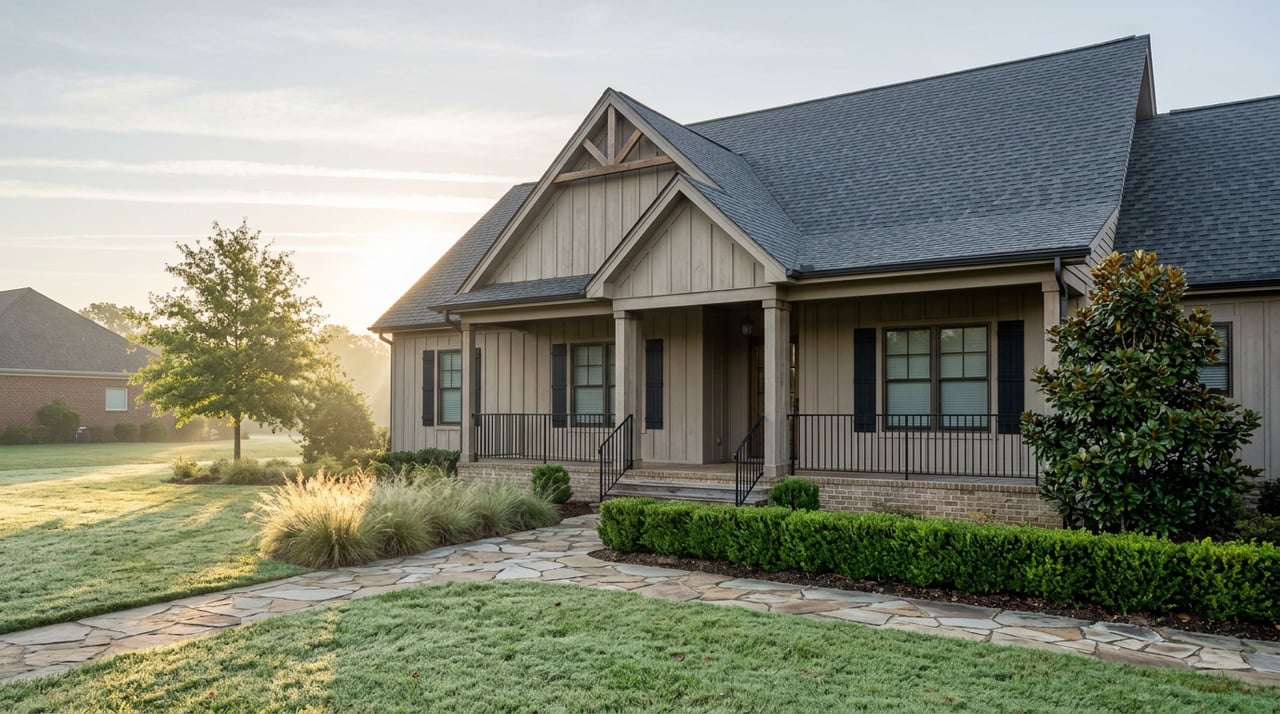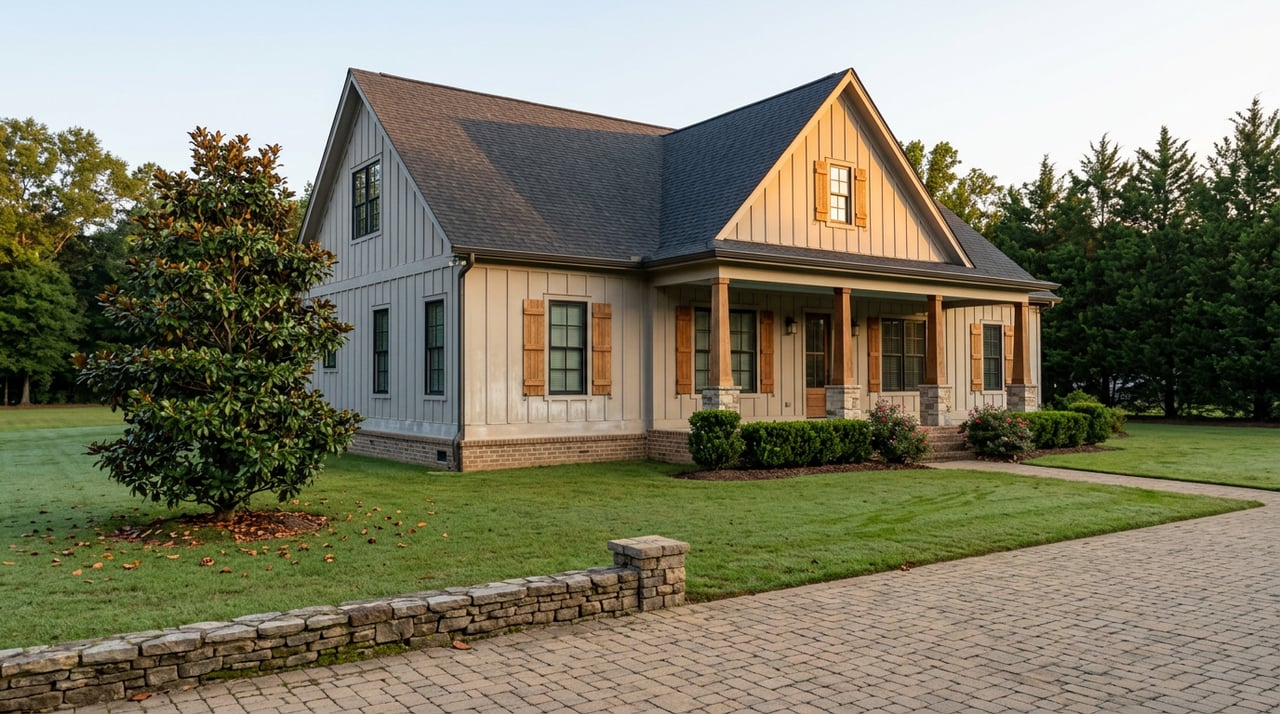
A buyer touring two Lake Norman homes this fall might see the same dock hardware, the same board-and-batten siding, the same price range on paper, and assume the higher listing simply has a better lot. Sometimes it does. Just as often, the real difference is invisible from the driveway: the two houses sit in different counties, sometimes only a few streets apart, and that line changes the tax bill, the permitting timeline, and even which sales actually count as comps.
Lake Norman gets marketed as a single destination. It behaves more like four separate jurisdictions that happen to share 520 miles of shoreline. Iredell, Mecklenburg, Lincoln, and Catawba counties each run their own tax rates, their own assessment schedules, and their own building and zoning offices. The lake doesn't care where the county line falls. Your closing statement will.
The Line Nobody Points Out on the Tour
Davidson is the cleanest example, because the town says so itself. On its own property tax page, the Town of Davidson lists two different county rates for the same town: $0.4927 per $100 of assessed value on the Mecklenburg County side, and $0.50 per $100 on the Iredell County side. Same downtown, same school assignment conversations, same walk to the farmers market. Different county, different base tax rate, published by the town itself rather than buried in a spreadsheet.
That's a two-and-a-half-cent gap per $100 of assessed value, which sounds small until you multiply it across a $1.5 million waterfront assessment and hold the property for a decade. It's also a preview of a bigger pattern: every town ringing the lake sits inside one of four counties, each with its own revaluation calendar and its own permitting counter. A buyer who only compares list prices between towns is comparing the visible half of the cost. The county line is the half nobody photographs for the listing.
What May's Closings Show About Which Side of the Lake You're On
The county line doesn't just affect taxes. It correlates with genuinely different price tiers, and the most recent verified data makes that split hard to miss.
A Q3 2026 market compilation built from Canopy MLS direct-frontage closings identified 22 verified waterfront sales across the lake's four counties in May 2026, with an overall median sale price of $1,653,982 and a median of $606 per square foot. Sellers in that set received 96.6 percent of asking on average. Sales ranged from the mid-$400,000s to $12.5 million, which on its own tells you "waterfront" is not a single price band. The town breakdown is where the story gets specific:
- Mooresville carried half the lake's waterfront volume that month, 11 of the 22 closings, at a $1.465 million median.
- Cornelius posted just two closings, but they averaged $3.56 million.
- Denver logged four sales at a $1.86 million median.
- Realistic direct-frontage entry points sat around $950,000 to $990,000 in Troutman and Sherrills Ford, with waterfront townhomes starting near $560,000 in Denver.
Nearly half of all waterfront sales that month, 45 percent, closed under $1.5 million, which cuts against the idea that Lake Norman waterfront is exclusively a trophy-home market. The top end is real too: a home on Jetton Road closed July 31 at $5.8 million, 15 percent over asking, and the largest confirmed sale of 2026 so far landed at $12.5 million on Island Drive in Huntersville. Active lake-wide inventory sits around 1,490 listings worth a combined $1.6 billion, and buyer interest is arriving from outside the region, with New York, Washington D.C., and Los Angeles leading inbound searches.
Put those numbers side by side and the town you shop in behaves less like a style preference and more like a price filter. Two closings in Cornelius averaging $3.56 million and eleven in Mooresville averaging $1.465 million aren't describing different tastes. They're describing different markets that happen to touch the same water.
The Permit Adds Another Layer, Even Below the Waterline
The county split doesn't stop at the shoreline. Lake Norman is a Duke Energy reservoir, built and operated under a federal license from the Federal Energy Regulatory Commission. Duke owns the land at and below the lake's full pond elevation of 760 feet, which means the dock in the listing photos sits on Duke's property, not the seller's. Every dock, pier, lift, or seawall needs its own approval through Duke's Lake Access Permit System, and that permit does not automatically transfer with the deed. A buyer has to confirm the dock is properly registered and get it transferred into their name before it's truly theirs. Standard private dock reviews through Duke typically run four to twelve weeks, which matters if a buyer is picturing a boat in the water by Memorial Day.
That federal-level permit is only the first layer. Depending on which of the four counties the parcel sits in, a buyer may also need separate county building, zoning, or floodplain permits for shoreline work, stacked on top of whatever Duke requires. So the same "four counties, one shoreline" pattern that sets the tax bill also sets how long it takes to get a dock modification approved, and which office you call to do it.
What This Means If You're Comparing Towns This Fall
None of this argues for one town over another. It argues for asking a different question than most buyers start with. Instead of "what does the median look like in Mooresville versus Cornelius," the sharper question is "which county does this specific parcel sit in, and what does that mean for my tax bill, my permitting timeline, and the comps that actually apply to it."
For sellers, it cuts the other way. A Cornelius waterfront listing shouldn't be priced off a Mooresville comp, even if both closed in the same month and both back up to the same body of water. The May data shows why: two counties, two very different median outcomes, even within the same 30-day window.
For buyers weighing entry points, Troutman and Sherrills Ford offer a real path into direct waterfront in the $950,000 to $990,000 range without waiting for a $3 million Cornelius listing to come down in price. For buyers who want more house sooner, Denver's waterfront townhome inventory starting near $560,000 is worth a look precisely because it sits in a different county with a different cost structure than the lake's more established south-shore towns.
A Few Questions Worth Asking Before You Write an Offer
Does the county line affect resale value, or just the tax bill? Both. The tax rate and revaluation schedule affect carrying costs every year you own the home. The permitting office affects how quickly you can add a lift or expand a dock, which shapes what the next buyer is willing to pay when you sell.
Is Davidson the only Lake Norman town split by a county line? It's the clearest documented example, since the town itself publishes both county rates on the same page. Buyers anywhere near the lake should still confirm which county a specific parcel falls in before comparing it to a neighboring listing, since Iredell, Mecklenburg, Lincoln, and Catawba counties all touch the shoreline.
If you're weighing towns around the lake and want to know what a specific parcel's county line actually means for your numbers, not just its price tag, Darlene (Sharon) Teeter has spent more than two decades working these exact distinctions street by street. Reach out for a free consultation or a home valuation that accounts for the county you're actually buying into.